The Symphony of AI: How Workflow Orchestration Unlocks Superhuman Capabilities
How can we move beyond individual AI models to achieve capabilities that feel almost superhuman? The answer isn't just in the AI itself; it's in the partnership we form with it. It’s about having an idea and, with AI as a tool, achieving a functional Minimum Viable Product (MVP) in hours, not months.
This, I believe, is the new measure of superhuman strength in the digital age.
What is AI Workflow Orchestration?
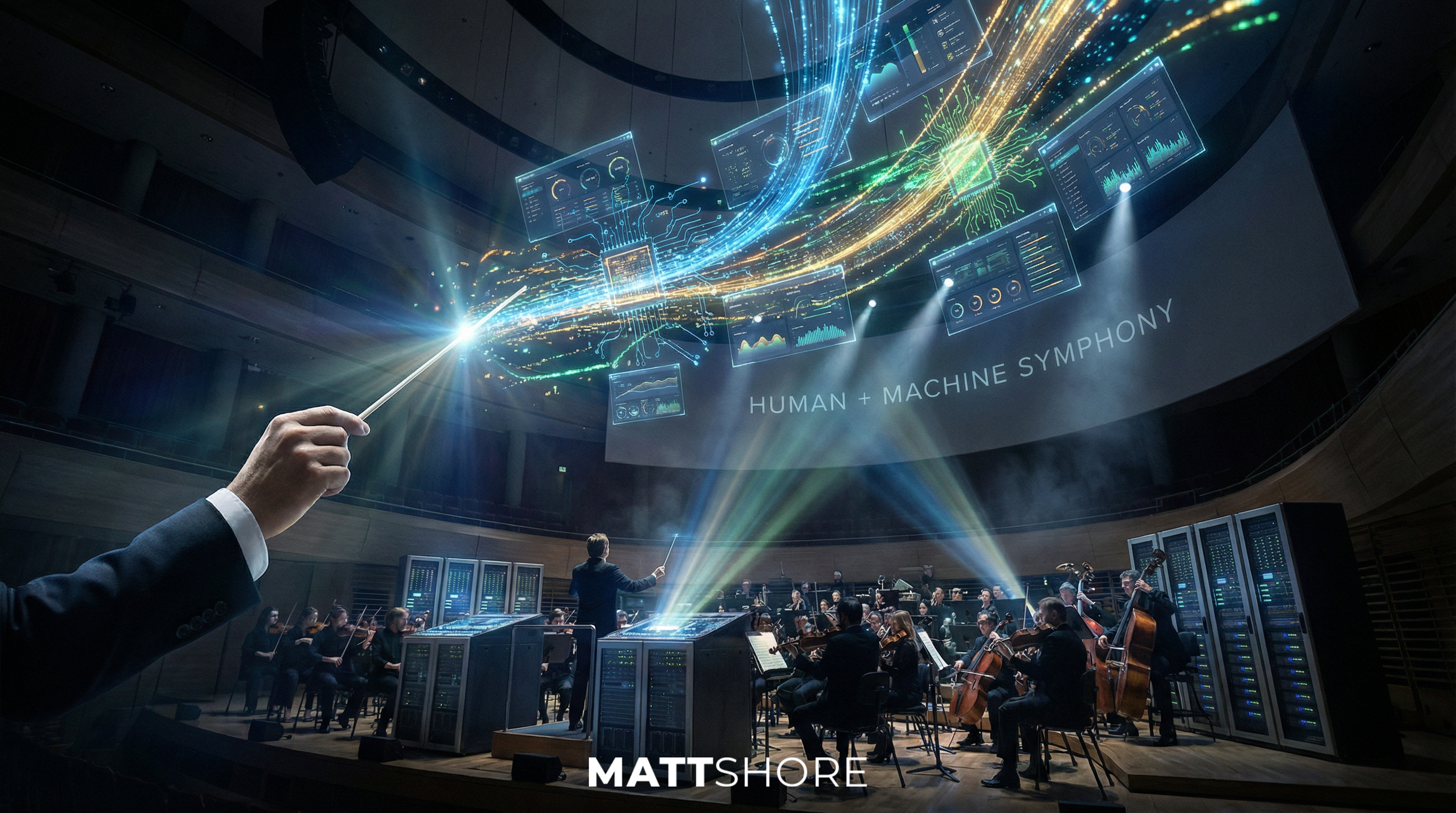
AI workflow orchestration is more than just automation. It represents a fundamental shift from writing low-level code to defining high-level prompts, plans, and ideas. Think of it like a symphony orchestra.
The AI models are the individual musicians, each a virtuoso in its own right. But to create a symphony, you need a human conductor—a visionary who guides the overall performance, adapts when a note is missed, and brings the entire piece together.
The Human Conductor: Navigating Frustration and Unleashing Creativity
Let’s be honest: many AI projects don’t work. Trust me, I’ve been there. The experience can be intensely frustrating, especially when the AI is confidently wrong, leading to a bizarre, passive-aggressive feedback loop where your own logic is questioned. My favourite part is when the AI is wrong and is still passive aggressive that my logic is wrong.
But this time, I’m not alone. And that’s empowering.
Persistence is the new superpower. The key skill in this new paradigm isn't decades of software engineering expertise, but an unwavering persistence to learn, adapt, and iterate. It's the willingness to break the tools at your disposal to get to the end result.
"Experiential speed": When the AI chooses the wrong library, hallucinates a function, or misunderstands the goal, the ability to quickly diagnose, correct, and re-prompt is what turns a 6-month project plan into a 3-hour MVP. Working alongside AI, even with its flaws, is empowering. Fixing the bugs with this superhuman strength by your side creates a powerful sense of accomplishment, bringing ideas to life at an unprecedented pace.
A Dose of Realism: The Unsung Challenges
As exciting as this is, it’s crucial to stay grounded. The narrative of the "human as the heroic conductor" is powerful, but it often downplays the significant challenges.
The unsung challenges
- Survivorship bias: That "MVP in 3 hours" is an outlier. It ignores the vast number of failed attempts and dead ends that precede such a success.
- Technical debt: Rapid, AI-driven prototyping can create brittle, poorly documented code that's incredibly difficult to maintain or scale.
- Orchestration cost: Chaining multiple complex API calls can become prohibitively expensive, both financially and computationally.
Building the Symphony: It Still Takes Work
The most critical component in any AI workflow is the human element. Success requires a person with an unwavering need to reach the objective, armed with persistence and the ability to learn and adapt. It assumes the "human conductor" has the skills to effectively prompt, debug, and guide the AI—a new and complex skill set in itself.
For many, the initial frustration doesn't lead to empowerment; it leads to abandoning the project altogether. That’s a reality we can’t ignore.
The Future is Augmented
AI workflow orchestration is a partnership. The future isn’t about replacing humans, but about augmenting them. When you can bring your ideas to life without needing decades of traditional expertise, the feeling is immense. I hope persistence and the ability to learn and adapt are the skills my kids learn.
The essential skills for the next generation will be persistence and the ability to adapt in the face of this powerful, flawed, and ultimately empowering technology.