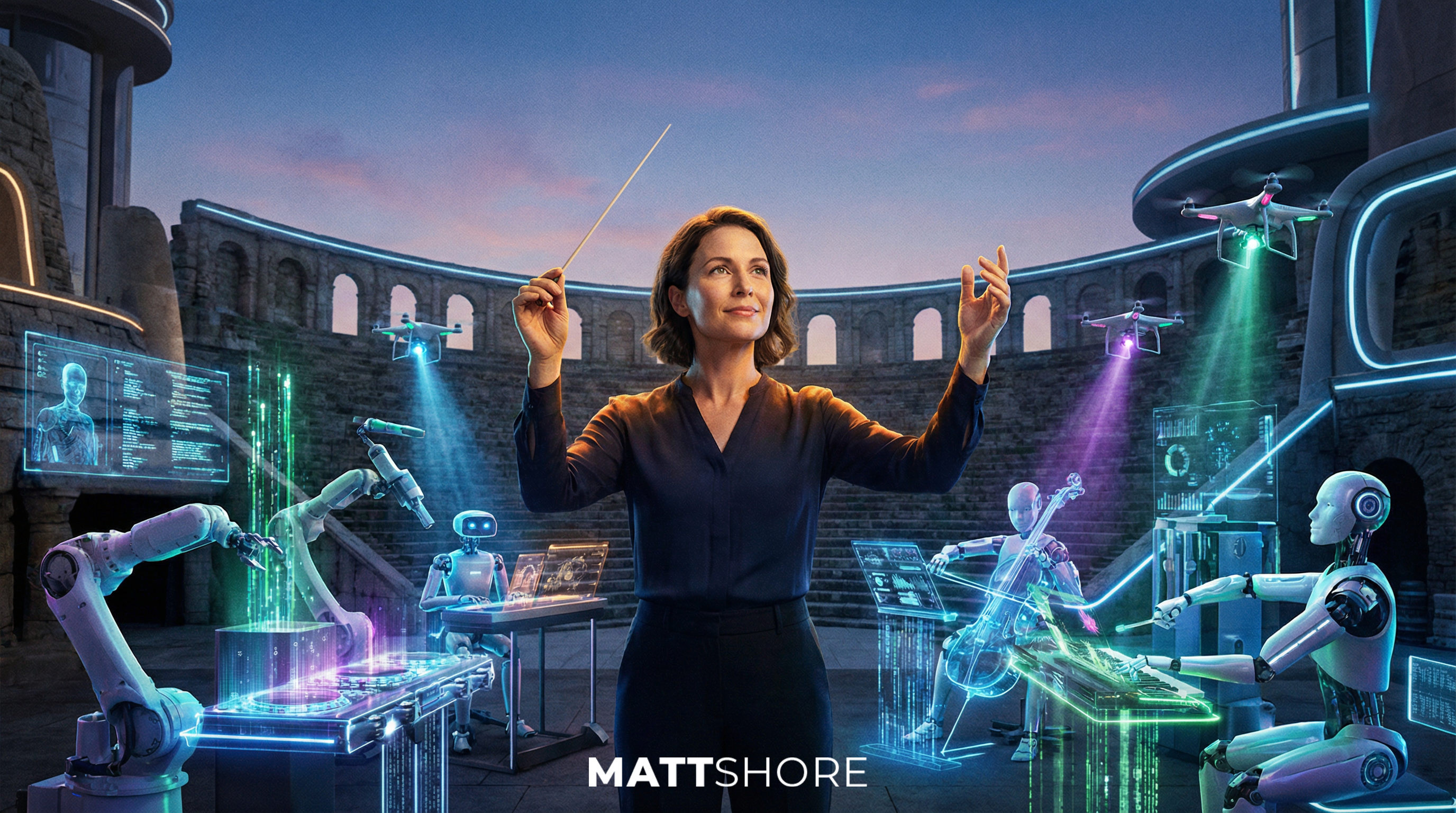
AI vs. BPA Revisited: The Human Element in the Symphony of Automation
Just over a year ago, I penned a piece titled "AI vs. Business Process Automation: What’s the Difference, and Why Should You Care?" It was a breakdown of two powerful forces reshaping our digital world, and a call to understand their distinct roles. Fast forward to today, and while the core definitions still hold, the landscape has evolved dramatically.
The lines between AI and BPA haven't just blurred; they've begun to intertwine into a complex, often challenging, but ultimately more powerful symphony.
The Blurring Lines & The Human Conductor
Back then, we talked about AI as the brain and BPA as the engine. Today, that engine is running on AI-powered fuel, and the brain is constantly learning from the engine's output. The real shift isn't just in what these technologies do, but how they're orchestrated. We're no longer just automating tasks; we're orchestrating entire workflows where AI models and traditional automation work in concert.
At the heart of this symphony? The human conductor. It's not about stepping back and letting the machines run wild. It's about active guidance, constant debugging, and an unwavering persistence to keep the performance on track, even when the AI hits a sour note.
The Reality of "Superhuman" Capabilities: A Dose of Realism
There's a lot of talk about AI unlocking "superhuman capabilities" and achieving MVPs in mere hours. And yes, the speed can be exhilarating. But let's be real for a moment. That "MVP in 3 hours" often comes with a hidden cost: technical debt. AI-generated code can be brittle, poorly documented, and a nightmare to maintain. The initial euphoria can quickly turn into frustration when you're debugging a system that's confidently, yet passively-aggressively, telling you your logic is wrong.
The true cost of AI orchestration
- Mental overhead — Managing complexity, debugging AI that "confidently" gets it wrong
- Financial burden — Chaining multiple API calls, token bills that add up
- Sheer persistence — Turning a promising idea into a robust, production-ready solution
This isn't a set-it-and-forget-it scenario; it's a continuous battle of wits and will.
The Evolving Skillset: From Code to Intent
The skillset required has also shifted. While low-level coding remains vital, the emphasis is increasingly on:
This constant iteration, this "experiential speed," is what allows us to bring ideas to life at an unprecedented pace. But it demands a new kind of engineering—one rooted in adaptability, critical thinking, and an almost stubborn refusal to give up when the AI inevitably stumbles.
The Symphony Continues: A Hopeful, Grounded Future
So, a year on, the question isn't just "Is it AI or BPA?" It's "How do we orchestrate them effectively, ethically, and sustainably, with a human firmly at the helm?" The journey is fraught with challenges, frustrations, and moments where you want to pull your hair out. But it's also incredibly empowering.
The future of automation is a symphony, and we, the human conductors, are still learning the score. It requires persistence, a willingness to learn and adapt, and an unwavering need to break through the limitations of our tools to achieve our objectives. And that, I believe, is a skill worth cultivating for the next generation.